We recently walked a site on the Derwent estuary where residual heavy metals from a former timber treatment yard had leached into the sandy loam. The client needed a defensible remediation plan before the council would sign off on subdivision. That job sums up what we do in Hobart: cost-effective contaminated soil remediation that meets EPA Tasmania's strict closure criteria. We start with a detailed site history, then deploy field screening tools to map hot spots before any lab analysis begins. It saves time and avoids surprises.
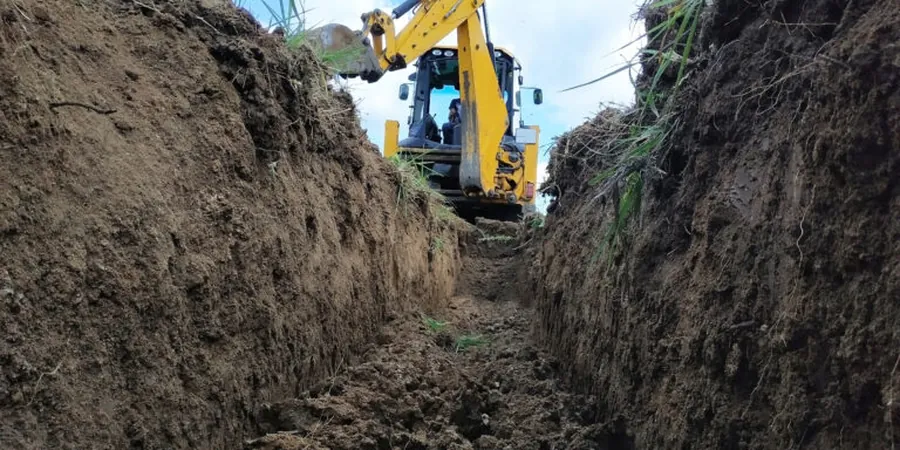
Hobart's variable geology means no two remediation jobs are the same. We design site-specific strategies that meet EPA Tasmania closure criteria without overspending.
Methodology and scope
Local considerations
The biggest risk we see on Hobart remediation sites is hidden contamination beyond the original investigation footprint. A former service station might have a clean record from the tank pit but show high TPH under the workshop slab. We use a phased approach: start with a conceptual site model, then systematically test with a grid or adaptive sampling. That way we don't miss the hot spot that could blow the budget later. Our equipment includes a direct-push Geoprobe rig that collects soil and groundwater samples without the mess of an auger.
Applicable standards
AS 1726:2017 Geotechnical site investigations, AS 4482.1-2005 Guide to the investigation and sampling of potentially contaminated soil, EPA Tasmania Contaminated Sites Guidelines (2020), National Environment Protection (Assessment of Site Contamination) Measure 1999 (NEPM)
Associated technical services
Phase I & II Site Assessments
Historical review, site inspection, soil and groundwater sampling, laboratory analysis, and conceptual site model development to identify contamination risks.
Remediation Design & Implementation
Engineered remediation strategies including excavation and off-site disposal, soil vapour extraction, biopiles, and in-situ chemical oxidation tailored to Hobart's geology.
Validation & Closure Reporting
Post-remediation soil sampling, statistical validation against NEPM guidelines, and preparation of closure reports acceptable to EPA Tasmania for site sign-off.
Typical parameters
Frequently asked questions
What is the typical cost range for contaminated soil remediation in Hobart?
Costs vary with site size, contaminant type, and disposal requirements. A reasonable reference range for Hobart sites is between AU$5,030 and AU$21,130, depending on the volume of soil treated and the complexity of the remediation approach.
What contaminants are most common in Hobart soils?
In Hobart, the most frequently encountered contaminants are total petroleum hydrocarbons (TPH) from old service stations, polycyclic aromatic hydrocarbons (PAHs) from former gasworks, heavy metals like lead and arsenic from industrial sites, and asbestos fragments in demolition fill.
What remediation method works best for TPH contamination in Hobart?
For TPH contamination in Hobart's sandy loams, soil vapour extraction (SVE) combined with biopiles is often effective. The high permeability of the alluvial sands allows good air flow, while biodegradation handles the lighter fractions. For heavier residues, chemical oxidation with persulfate can be injected directly.
How long does a typical contaminated soil remediation project take in Hobart?
A straightforward excavation and off-site disposal job for a residential site might take 2-4 weeks from assessment to validation. More complex sites requiring SVE or chemical oxidation can run 3-6 months, including monitoring to confirm clean-up goals are met.