Hobart’s development has always been shaped by its deep-water port and the slopes of Mount Wellington. Early wharves and warehouses were built directly on the sandy estuarine flats, but as the city grew into the foothills, engineers quickly learned that the variable alluvial clays and silts demanded more than shallow footings. That’s why pile foundation design became essential for multi-storey buildings, bridge abutments, and retaining structures along the Derwent River. We combine local geological knowledge with code-compliant methods to ensure your loads reach competent strata, whether it’s dolerite bedrock or dense gravels. Before we specify a pile type, we always run a thorough study of soil mechanics to profile the subsurface conditions accurately. Our team has handled projects from Battery Point to Glenorchy, adapting designs to the unique ground conditions each site presents.
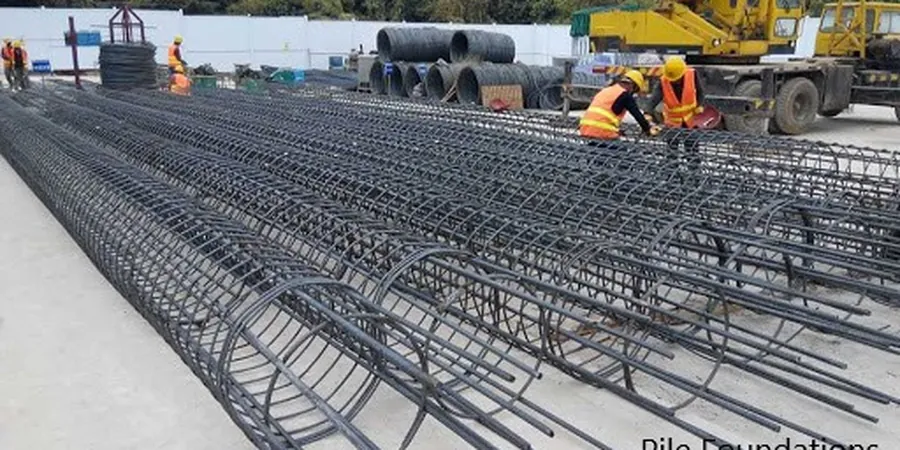
Pile foundation design in Hobart must account for variable alluvial clays, shallow groundwater, and the presence of dolerite bedrock at depth to avoid differential settlement.
Methodology and scope
- Bearing capacity analysis using both static formulas and PDA testing correlation
- Structural checks for axial, lateral, and moment loads per AS 2159
- Settlement estimates under working and seismic load combinations
- Corrosion assessment for steel piles in the saline estuarine environment
Local considerations
Hobart sits within a moderately active seismic zone, with a peak ground acceleration coefficient of 0.08g according to AS 1170.4. While that is not extreme compared to Wellington or Christchurch, the combination of soft estuarine soils and high water table can amplify ground motion and trigger liquefaction in loose sands. In areas like the Domain or Sandy Bay, we have encountered buried channels filled with loose alluvium that settle unevenly under cyclic loading. Pile foundation design must therefore include downdrag calculations, group efficiency factors, and a minimum embedment into stiff clay or rock. Ignoring the lateral response of the pile group under seismic shaking has led to structural damage in older buildings along the waterfront – a risk we systematically mitigate through proper soil-structure interaction analysis.
Explanatory video
Applicable standards
AS 2159-2009 Piling – Design and Installation, AS 1170.4-2007 Structural design actions – Earthquake actions, AS 4678-2002 Earth-retaining structures, AS 1726-2017 Geotechnical site investigations, Austroads Guide to Bridge Technology Part 7 – Foundation design
Associated technical services
Driven Precast Concrete Piles
Square or octagonal sections driven to a set refusal in dense sands or dolerite. Ideal for residential and light commercial projects where access is good and noise is not a constraint.
Bored Cast-in-Place Piles
Large-diameter piles drilled through fill and alluvium, socketed into bedrock. Used for high-rise buildings, bridge piers, and retaining walls where minimal vibration is required.
Steel H-Piles and Pipe Piles
High-capacity steel sections driven or jacked into stiff strata. Suitable for marine structures, jetties, and deep foundations in the Derwent estuary with corrosion protection coating.
Screw Piles (Helical)
Torque-controlled helical piles installed in tight-access sites, such as narrow laneways in the city centre or steep slopes in West Hobart. Fast installation and immediate load testing possible.
Typical parameters
Frequently asked questions
What is the typical cost range for a pile foundation design in Hobart?
For a standard residential or small commercial project in Hobart, our pile design fees generally fall between AU$2,710 and AU$9,240, depending on the number of piles, ground conditions, and required testing. This includes site data review, bearing capacity calculations, and a design report. Larger or more complex projects are quoted individually.
How deep do piles need to go in Hobart to reach competent bearing strata?
Depths vary significantly by location. Near the Derwent River, piles often penetrate 12 to 20 metres through soft alluvial clays before reaching dense gravels or dolerite bedrock. In elevated suburbs like Mount Nelson or Tolmans Hill, refusal may occur at 4 to 8 metres, but the rock surface can be uneven, requiring careful profiling.
Do you provide a pile load test as part of the design service?
Yes. We always recommend at least one static compression test per project to verify the design assumptions, and we can coordinate PDA or CAPWAP testing for driven piles. The results are used to adjust the final design and confirm that the factor of safety meets AS 2159 requirements.