The contrast between Battery Point and the Derwent Park industrial area is more than aesthetic. Battery Point sits on Jurassic dolerite with high seismic impedance. Derwent Park is built over deep Quaternary alluvium – soft, layered, and prone to resonance. An HVSR microtremor survey in Hobart captures that difference in minutes. It records ambient vibrations and isolates the H/V spectral ratio to identify the site's fundamental frequency. That single number – f0 – tells engineers whether a structure will resonate with the ground. We use this data to refine dynamic analyses before moving to invasive methods like the ensayo SPT for strength verification. It is fast, non-invasive, and perfectly suited to Hobart's varied geology.
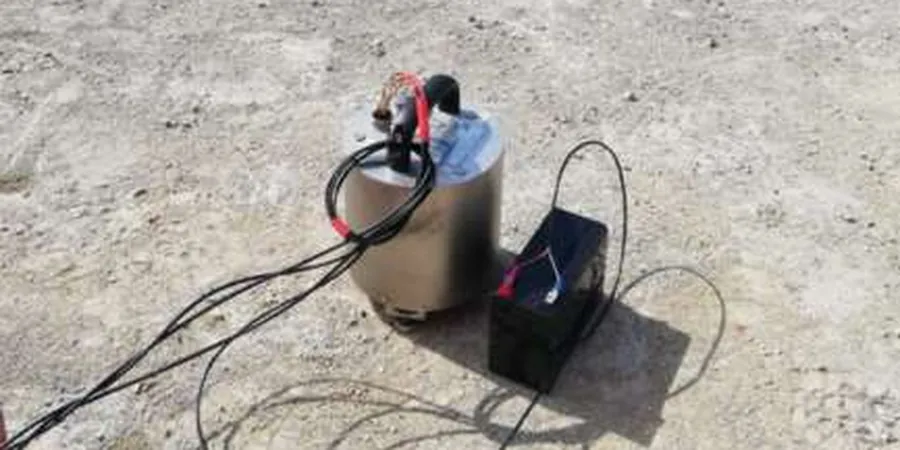
One HVSR station can resolve the fundamental frequency of a soft soil basin faster than a borehole, with zero disturbance.
Methodology and scope
Local considerations
Relying on boreholes alone in Hobart can miss the basin-edge effect. Many sites along the Derwent show amplification at 2–5 Hz – exactly the range that affects low-rise masonry. An HVSR microtremor survey in Hobart catches that resonance before it becomes a retrofit problem. We routinely see sites where the code-prescribed bedrock assumption underestimates amplification by a factor of two. That is a real risk for schools, apartments, and critical infrastructure. Combine HVSR with estabilidad taludes when working on hillside cuts near Sandy Bay. The method is cheap insurance against a costly misclassification.
Applicable standards
AS/NZS 1170.0:2002 – Structural design actions (seismic), SESAME (2004) – Guidelines for the implementation of the H/V spectral ratio technique, AS 1726:2017 – Geotechnical site investigation
Associated technical services
Single-station HVSR survey
Rapid f0 measurement at one location. Ideal for small sites, residential blocks, or preliminary screening. Includes sensor deployment, 45-minute recording, and spectral analysis report.
Multi-station array (2D profiling)
Grid of 6–12 stations across a site to map spatial variation of f0 and amplification. Recommended for schools, hospitals, and multi-block developments on alluvial ground.
HVSR + MASW integration
Combined inversion of H/V curve with surface-wave dispersion data yields Vs30 and depth to bedrock. Used for site class per AS/NZS 1170.0 without drilling.
Peer review and compliance check
Independent review of existing HVSR data from third-party surveys. We check field methodology, processing parameters, and compliance with SESAME guidelines for certification.
Typical parameters
Frequently asked questions
What is the fundamental frequency (f0) measured by an HVSR microtremor survey in Hobart?
f0 is the lowest natural frequency at which a soil column resonates. In Hobart's alluvial basins it typically falls between 1.5 Hz and 5 Hz. Values below 2 Hz indicate deep soft deposits; above 4 Hz suggest shallow stiff soil or rock. The Nakamura method isolates this peak from ambient noise without any active source.
How does an HVSR microtremor survey differ from a standard borehole investigation?
A borehole provides point-specific strength and stratigraphy but can miss lateral variations between holes. HVSR surveys the full soil column from surface to bedrock in one pass. It captures the dynamic response of the entire deposit. We use it to guide borehole placement and to validate assumptions in seismic design.
What is the typical cost range for an HVSR microtremor survey in Hobart?
For a single-station survey including field work and reporting, expect between AU$2,270 and AU$3,800. Multi-station arrays scale with number of points and interpretation complexity. The cost is significantly lower than a full borehole campaign and provides complementary dynamic data.