Seismic assessment in Hobart addresses the complex interaction between local dolerite bedrock, softer Quaternary sediments, and Tasmania’s evolving seismic provisions under AS 1170.4. Our work integrates site-specific ground response to identify zones where spectral accelerations may exceed code-defaults, particularly in the CBD and along the Derwent estuary. We deliver seismic amplification analysis to quantify basin-edge effects and seismic microzonation studies that map lateral variability for more precise hazard characterisation.
These evaluations are critical for hospitals, emergency-response facilities, and medium-rise framed structures on variable ground. For essential infrastructure where operational continuity is non-negotiable, we pair microzonation outputs with base isolation seismic design to reduce inter-storey drift and floor accelerations. The category supports performance-based briefs from concept through detailed design, ensuring Hobart projects meet both life-safety and post-event functionality targets.
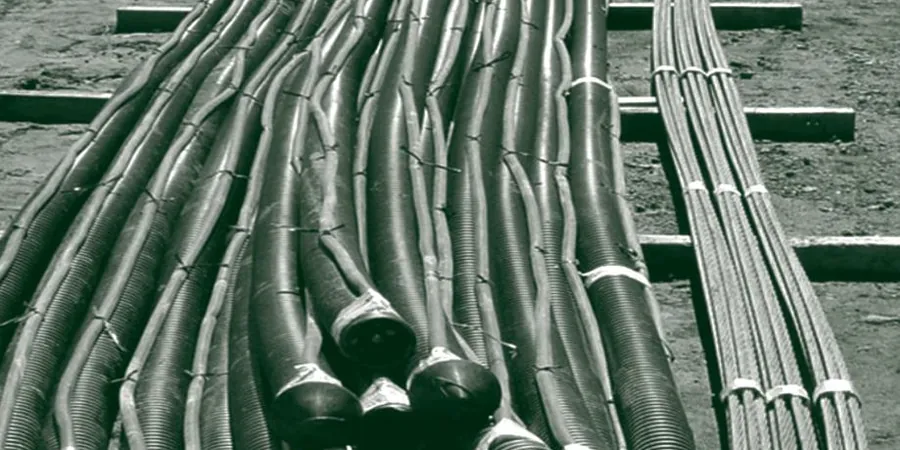
Bond stress in dolerite residual soils can exceed 500 kPa, while the estuarine silts near the Derwent rarely surpass 120 kPa — a difference that demands separate design methods.
Methodology and scope
Local considerations
Hobart sits in a moderate seismic zone with a peak ground acceleration of 0.08 g for a 1-in-500-year event, according to AS/NZS 1170.4. That might seem low, but the real risk comes from the amplification of ground motion in the deep alluvial basins of the Derwent valley — areas like New Town and Lutana. If an active anchor is designed using only static load assumptions, the cyclic loading during an earthquake can degrade bond stress at the grout-soil interface by 30% or more. Passive anchors, on the other hand, may not engage quickly enough under rapid loading if the surrounding soil has high fines content and low drainage. We address both failure modes by running dynamic triaxial tests on representative soil samples and incorporating the results into a pseudo-static stability analysis for every wall system we design in the greater Hobart area.
Explanatory video
Applicable standards
AS 4678-2002 – Earth-retaining structures (anchor design chapter), AS/NZS 1170.4:2007 – Structural design actions (seismic actions), BS 8081:2011 – Code of practice for grouted anchors (referenced for tendon durability)
Associated technical services
Active Anchor Design (Tensioned Tiebacks)
For walls that must not displace — such as deep excavations in the Hobart CBD — we design post-tensioned anchors that are proof-loaded and locked off at a specified load. We follow AS 4678 for bond-length verification and use strand tendons with corrosion protection for permanent works.
Passive Anchor Design (Soil Nails & Grouted Bars)
Where small movements are acceptable, passive anchors (soil nails or grouted bars) offer a cost-effective solution. We size them based on the available bond stress and the required factor of safety, often pairing them with a shotcrete facing for slope stabilization projects in areas like Taroona.
Corrosion Protection & Durability Assessment
Permanent anchors in Hobart's coastal environment face aggressive chloride exposure. We specify double-corrosion-protected systems (greased and sheathed tendons) per BS 8081, and include sacrificial steel coupons in test anchors to monitor long-term corrosion rates.
Proof-Loading & Performance Testing
Every anchor we design undergoes a proof-load test to 1.25 times the design working load. We use a calibrated hydraulic jack and dial gauge system, recording load-extension curves to confirm that the anchor behaves within the predicted elastic range.
Typical parameters
Frequently asked questions
What is the difference between an active and a passive anchor for retaining walls in Hobart?
An active anchor is post-tensioned and locked off at a load that pre-compresses the soil, so it resists movement from the start. A passive anchor (like a soil nail) relies on the wall deflecting a few millimetres before the reinforcement mobilizes its tensile capacity. In Hobart's stiff dolerite soils, both work well — but active anchors are preferred where wall displacements must stay below 10 mm, such as adjacent to heritage buildings in Battery Point.
How much does an anchor design and testing program typically cost in Hobart?
For a typical residential retaining wall (5–8 anchors), the full design, proof-load testing, and reporting falls between AU$1,850 and AU$5,620. Larger commercial projects with 20+ anchors and corrosion protection can reach the upper end of that range. We provide a fixed-price quote after reviewing the borehole data and wall geometry.
What soil conditions around Hobart are hardest to design anchors for?
The estuarine silts and soft clays of the Derwent floodplain — common in Moonah, Glenorchy, and Lindisfarne — have low undrained shear strength (20–40 kPa) and high plasticity. Bond stress in those materials rarely exceeds 120 kPa, so anchor spacing becomes tight and free-stressing lengths must be long enough to engage a competent stratum below. We often recommend a trial anchor program in those areas to verify the design assumptions before full production.