Hobart sits on a mix of Permian mudstone, Triassic sandstone, and Quaternary alluvial deposits along the Derwent estuary. That geological patchwork creates abrupt changes in soil stiffness within a single block. A building on firm sandstone can suffer cracking if one corner extends onto soft estuarine clay. We run differential settlement analysis to map those stiffness contrasts before foundation design begins. The work combines borehole logs from our calicatas exploratorias with lab consolidation tests on undisturbed samples. For Hobart projects, this avoids the common trap of assuming uniform ground across the site.
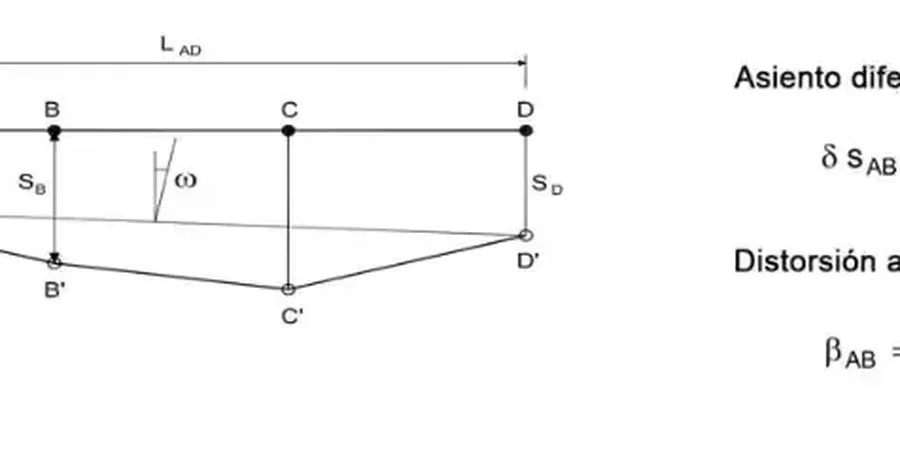
Differential settlement analysis in Hobart prevents structural damage by mapping stiffness contrasts in Permian mudstone and Quaternary alluvium.
Methodology and scope
Local considerations
The Derwent alluvium can be up to 15 m deep in pockets around the waterfront and lower Sandy Bay. These soft clays have high void ratios and low preconsolidation pressures. A 10 kPa increase from fill or footing load can trigger 50 mm of settlement under one column while an adjacent column on bedrock moves zero. That differential tears masonry walls and distorts steel frames. The risk is highest in winter when groundwater rises and reduces effective stress. Differential settlement analysis quantifies that risk so engineers can design stiffened rafts or deep foundations accordingly.
Applicable standards
AS 1726-2017 Geotechnical Site Investigations, AS 2870-2011 Residential Slabs and Footings, AS 1289.6.6.1 Standard Test Methods for One-Dimensional Consolidation Properties of Soils
Associated technical services
Residential Settlement Assessment
Oedometer tests on 2-3 undisturbed samples from the foundation depth. Time-rate curves for immediate and primary consolidation. Settlement estimate under strip footings or slab-on-grade. Report with AS 2870-2011 classification.
Commercial / Industrial Settlement Study
Multi-borehole program with consolidation tests on each stratum. 3D settlement contouring under column loads. Includes secondary compression (creep) estimates for long-term performance in Hobart's organic clays.
Embankment & Fill Settlement Analysis
Staged construction simulation with pore pressure dissipation modelling. Preconsolidation via surcharge or wick drains. Monitoring point layout for field verification of predicted settlements.
Typical parameters
Frequently asked questions
How is differential settlement analysis different from total settlement analysis?
Total settlement analysis estimates how much a single point sinks. Differential settlement analysis compares the vertical movement between two or more foundation points. That relative movement is what cracks walls, jams doors, and breaks pipe connections.
What soil parameters matter most for differential settlement in Hobart?
The compression index (Cc) and preconsolidation pressure (σ'p) control the magnitude. The coefficient of consolidation (cv) controls the rate. In Hobart's estuarine clays, cv is often below 2 m²/year, meaning settlements take months or years to develop.
Can settlement analysis be done after the foundation is already built?
Yes, but it is reactive rather than preventive. We use survey monitoring data combined with lab tests on samples taken near the structure. The analysis then predicts future movement and helps decide if underpinning or slabjacking is needed.
What is the typical cost range for a differential settlement study in Hobart?
A residential-level study with 2-3 oedometer tests and a settlement contour report ranges between AU$1.030 and AU$2.930. Larger commercial studies with multiple boreholes and 3D modelling can go higher depending on the number of load cases.
How long does the analysis take from sampling to final report?
Sampling and field work take 1-2 days. Consolidation tests require 5 to 14 days because each load increment stays on for 24 hours. The analysis and report add another 3-5 days. Total turnaround is typically 2 to 4 weeks.